
Let's be honest. Baking the perfect apple pie is a quest. You've followed recipes to the letter, used "good baking apples," and still ended up with a soggy bottom, a filling that's turned to mush, or a flavor that's just... flat. I've been there. After years of testing, I found the solution wasn't a new crust recipe or a fancy technique. It was the apple itself. And more specifically, the Envy apple.
This isn't just another variety. Envy apples, a cross between Braeburn and Royal Gala developed in New Zealand, have quietly become the not-so-secret weapon of discerning bakers. Their unique balance of sweetness, firmness, and low water content addresses the core frustrations of pie-making. Forget the endless debate between Granny Smith and Honeycrisp. Let's talk about what actually works in the oven.
What's Inside This Guide
The Science Behind a Perfect Pie Apple
Most pie failures stem from apple choice. You need an apple that performs under heat. Think of it as casting the lead role in a play—the wrong actor brings down the whole show.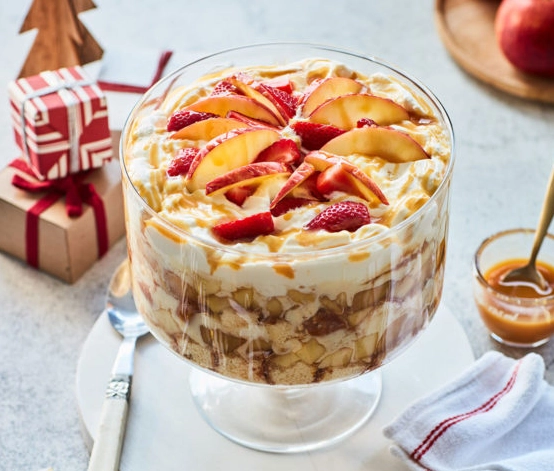
Three non-negotiable traits define a great pie apple:
- Structural Integrity (Firmness): The apple must hold its shape. A soft apple like McIntosh will vanish into applesauce, leaving empty gaps between the top crust and a watery filling.
- Flavor Concentration: The flavor should intensify, not dilute, when baked. It needs enough natural acidity to balance sweetness and prevent a cloying taste.
- Low Moisture Release: This is the silent killer. Apples with high water content steam inside the pie, creating a soggy crust and a soupy filling that never properly sets.
Envy apples score exceptionally high on all three. Their flesh is remarkably dense and crisp, a trait inherited from Braeburn. They have a high sugar content (Brix level) but retain a subtle tartness. Crucially, their cell structure is tight, meaning they release moisture slowly and predictably during baking. This gives your thickener (like cornstarch or tapioca) time to work, resulting in a glossy, sliceable filling that clings to the apples, not a pool of juice at the bottom of your pie plate.
Envy vs. The Competition: A Baker's Breakdown
Let's move beyond vague recommendations. Here’s a direct comparison of Envy against the usual suspects, based on my own side-by-side bake-offs.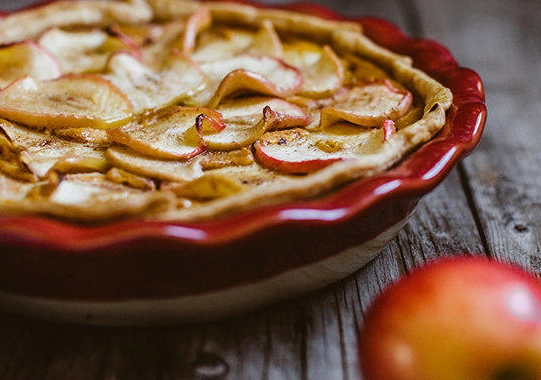
| Apple Variety | Best For | Texture After Baking | Moisture Release | Flavor Profile Baked | My Verdict for Pie |
|---|---|---|---|---|---|
| Envy | Slicing, Baking, Eating Fresh | Firm, distinct slices | Very Low & Slow | Rich, honeyed, balanced | The All-Star. Predictable and flawless. |
| Granny Smith | Baking (traditional choice) | Softens considerably | Moderate to High | Tart, requires more sugar | Reliable but can be one-note sour. Often needs a sweeter apple mixed in. |
| Honeycrisp | Eating Fresh, Salads | Can become mealy | Very High | Sweet but can flatten | Overrated for pie. Juicy is great for eating, terrible for a stable filling. High risk of sogginess. |
| Braeburn | Baking, Eating | Holds shape well | Low | Spicy, tart-sweet | Excellent, but less consistently available. Envy's more refined parent. |
| Golden Delicious | Sauces, Eating | Turns to mush | High | Bland, disappears | Avoid for standalone pie. Lacks structure and flavor punch. |
The table tells a clear story. While Granny Smith is the safe, old-school pick, it often lacks complexity. Honeycrisp, despite its popularity, is a liability in a closed pie—its excessive juice is a recipe for disaster. Envy occupies a unique sweet spot: the eating quality of a premium snack apple with the baking backbone of a champion.
A note from experience: Many bakers swear by mixing apples. I used to. With Envy, I often don't bother. Their flavor is complex enough to carry a pie solo. This simplifies shopping and prep—a huge win on a busy baking day. If you do mix, pair Envy with a tart apple like Granny Smith in a 2:1 ratio (Envy to Granny) for a more pronounced sweet-tart contrast.
How to Buy and Store Envy Apples for Baking
You can't make a great pie with subpar fruit. Here’s how to source and handle Envy apples like a pro.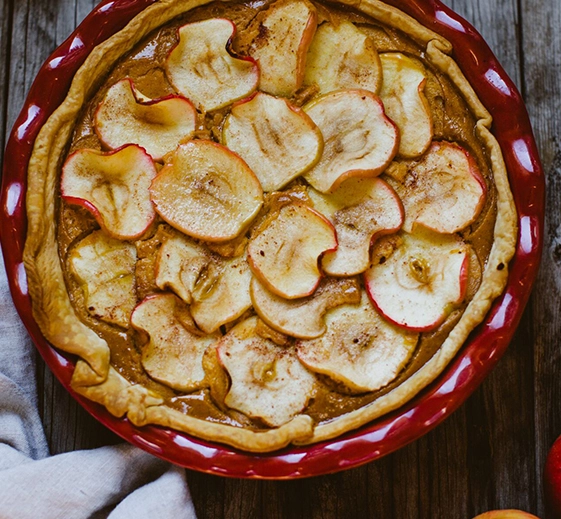
Finding Them
Envy apples are widely available in major supermarkets across the U.S. and Canada (look for the "Envy" brand sticker). Their season runs from late March through early October from the Southern Hemisphere, and from October through July from the Northern Hemisphere, making them a nearly year-round option. You can also find them at higher-end grocers like Whole Foods or through online produce services. For the freshest batch, check with local orchards in Washington or New York state during the fall harvest—many now grow Envy due to demand.
Selecting the Best Batch
Go for medium to large apples with a deep, consistent red blush over a creamy yellow background. They should feel heavy for their size (density = less air, more flesh) and be rock-hard to the touch with no soft spots or wrinkles. A fragrant, sweet aroma at the stem end is a good sign.
Storage for Optimal Baking
This is critical. Store them in the crisper drawer of your refrigerator. The cold dramatically slows ripening and moisture loss. At room temperature, they'll soften over a week. For pie, you want that refrigerator-crisp texture. Take them out about an hour before peeling and slicing to make the job easier.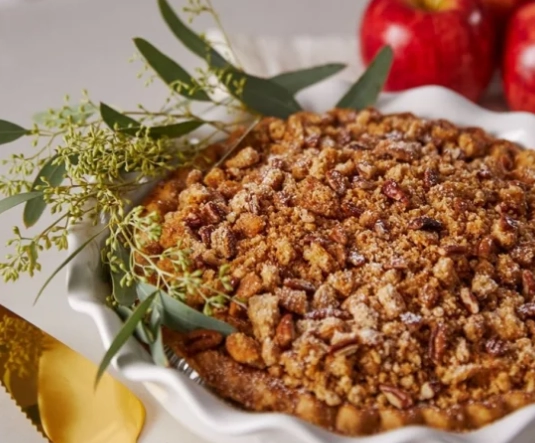
The Master Envy Apple Pie Recipe
This recipe leverages the Envy apple's strengths. Notice the reduced thickener and sugar compared to recipes designed for wetter apples.
Yield: One 9-inch deep-dish pie
Prep: 45 minutes
Cook: 50-60 minutes
Chill: 1 hour (dough)
Ingredients
- For the Crust: Your favorite double-crust recipe, or 2 store-bought pie doughs.
- For the Filling:
- 2.5 - 3 lbs (about 6-7 large) Envy apples
- 1/3 cup (65g) granulated sugar (adjust based on your sweet tooth)
- 1/3 cup (65g) light brown sugar, packed
- 3 tablespoons (24g) cornstarch or minute tapioca
- 1 teaspoon ground cinnamon
- 1/4 teaspoon ground nutmeg
- 1/4 teaspoon fine sea salt
- 1 tablespoon fresh lemon juice
- 1 teaspoon vanilla extract
- 2 tablespoons (28g) unsalted butter, cut into small pieces
Step-by-Step Process
- Prep the crust. Roll out your bottom crust and fit it into a 9-inch pie plate. Trim edges, leaving a 1-inch overhang. Chill in the fridge. Roll out the top crust and keep it chilled on a sheet.
- Prep the apples. Peel, core, and slice the Envy apples into consistent 1/4-inch thick slices. Toss immediately in a large bowl with the lemon juice and vanilla.
- Mix the filling. In a small bowl, whisk together the sugars, cornstarch, cinnamon, nutmeg, and salt. Sprinkle this over the apples and toss thoroughly until every slice is coated. Let it sit for 15 minutes. You'll see minimal juice—that's the Envy apple working.
- Assemble. Pile the apple mixture into the chilled bottom crust, mounding it higher in the center. Dot the top with the pieces of cold butter. Place the top crust over the filling, seal and crimp the edges. Cut several large steam vents. Brush with an egg wash (1 egg + 1 tbsp water) and sprinkle with coarse sugar.
- Bake. Place the pie on a rimmed baking sheet (to catch any bubbles). Bake in a preheated 400°F (200°C) oven for 20 minutes. Then reduce the temperature to 375°F (190°C) and bake for another 35-45 minutes, until the crust is deep golden brown and thick, bubbling juice emerges from the vents.
- The Crucial Wait. Let the pie cool on a wire rack for at least 4 hours, ideally overnight. This is non-negotiable. The filling needs this time to set up properly. Cutting in early is the main reason for runny pie, even with perfect apples.
Common Pitfalls and How to Avoid Them
Even with the right apple, small mistakes can trip you up.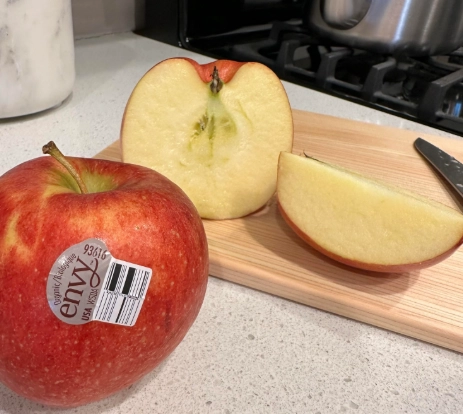
Pitfall 1: Skipping the pre-mix rest. Those 15 minutes after mixing the apples with sugar and thickener are vital. It allows the cornstarch to start dissolving and adhering to the apple slices, ensuring even thickening.
Pitfall 2: Slicing apples too thin or too thick. 1/4-inch is the sweet spot. Thinner slices lose structure; thicker slices create gaps and don't pack well.
Pitfall 3: Under-baking. The pie is done when the filling is actively bubbling through the vents for a few minutes. That bubbling means the thickener has reached its full gelling temperature. A pale, quiet pie is an undercooked pie.
Pitfall 4: Assuming Envy apples need pre-cooking. A common "pro tip" for wet apples is to pre-cook the filling. With Envy, this is unnecessary and can turn them mushy. Their low moisture release means they cook perfectly in the time it takes the crust to brown.
Your Envy Apple Pie Questions, Answered
I can only find small Envy apples. Will they work as well?
Size isn't a direct indicator of baking quality, but smaller apples mean more peeling and coring work for the same weight. The flesh should still be dense and crisp. Just be sure to adjust your total weight—you might need 8-9 small apples instead of 6-7 large ones. The key is to fill your pie plate with a good mound.
My Envy apple pie filling is still a bit runny after cooling. What went wrong?
The most likely culprit is not letting it cool long enough. Four hours is a minimum; overnight is best. If you did wait and it's still loose, your thickener measurement might have been slightly off, or the filling didn't reach a full, rolling boil in the oven. Next time, ensure your oven is fully preheated and consider increasing cornstarch by half a tablespoon. Also, verify you're using cornstarch, not corn flour.
Are Envy apples too sweet for a tart-loving family?
They're sweet, but not cloying. To cater to a tart preference, reduce the granulated sugar in the filling to 1/4 cup and increase the lemon juice to 1.5 tablespoons. You can also use the mixing strategy: combine 2 lbs of Envy with 1 lb of straight-up tart Granny Smith apples. This gives you control over the final flavor profile.
Can I use Envy apples for other baked desserts like crisps or tarts?
Absolutely, and they excel. For an apple crisp, you'll get defined, tender apple pieces under the topping instead of a homogenous mush. For a French apple tart where arranged slices need to hold their shape, Envy is a top-tier choice. Their performance translates across any baked application where apple integrity matters.
How do Envy apples compare to the newer Sweetango or Cosmic Crisp for baking?
Sweetango is another excellent, firm baking apple, similar to Envy in its low juiciness. It can be slightly more tart. Cosmic Crisp is incredibly firm and stores well, but it can be juicier than Envy, so you might need to adjust thickener upwards slightly. All three are superior to traditional choices. Envy's widespread availability and consistent flavor profile give it a practical edge for most home bakers.
The quest for the perfect apple pie has a clear frontrunner. Envy apples deliver what every baker seeks: reliability. They turn the volatile process of pie-making into a predictable, successful outcome. You spend less time worrying about pectin levels, water content, or flavor balance, and more time enjoying the unmistakable result—a pie with a crisp crust, a gorgeously set, glossy filling, and slices of apple that taste distinctly, wonderfully, of apple.
Give them a try in your next pie. The difference isn't subtle. It's the difference between a good pie and the one people ask you to make again and again.
Reader Comments