You're trying to eat better, maybe tracking macros, and you think, "I'll get the chicken caesar salad." It feels like a safe, healthy choice. But then that nagging question hits: just how many calories am I actually about to consume? The short, frustrating answer is: it depends. Wildly. A seemingly innocent bowl can swing from a reasonable 350 calories to a gut-busting 1,200+.
I've been there. I used to order the salad thinking I was being "good," only to feel sluggish afterward. It wasn't until I started digging into the nutrition facts—and working as a nutrition coach—that I saw the huge traps hidden in this classic dish. Most people fixate on the chicken, but the real culprits are elsewhere.
What’s Inside This Guide
The Calorie Range: From Light to Heavy
Let's cut to the chase. A standard chicken caesar salad's calorie count isn't one number. It's a spectrum defined by where and how it's made.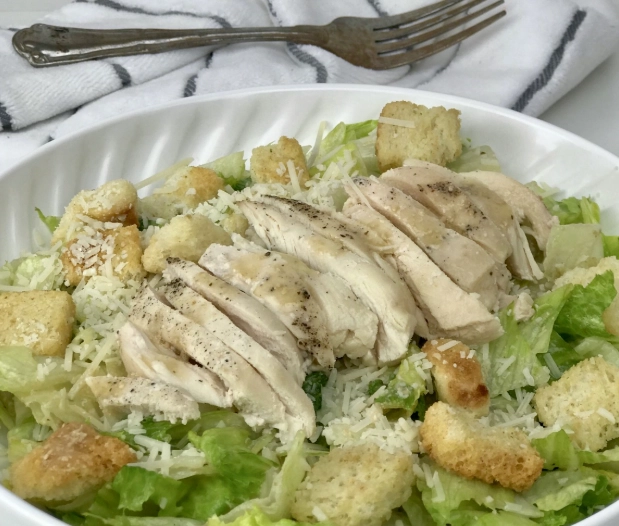
Think of it this way: a homemade salad where you control every component can be a lean, protein-packed meal around 400-550 calories. You grill a chicken breast, use a modest amount of light dressing, and go easy on the cheese.
Now, walk into a typical casual dining restaurant or chain. The story changes. Portions balloon. That "side" salad becomes an entree-sized trough. The dressing is often pre-tossed, meaning they use way more than you ever would. The croutons are buttery and abundant. The chicken might be fried or marinated in oil. Suddenly, you're looking at 750 to 1,100 calories without breaking a sweat. I've seen analyses of some chain restaurant salads pushing 1,300 calories—that's more than a large burger and fries!
The Big Picture: The difference between the low and high end isn't about the lettuce or even the chicken. It's almost entirely in the dressing, croutons, and cheese. Master those three, and you master the calorie count.
Ingredient-by-Ingredient Calorie Breakdown
To understand the total, you need to know the parts. Here’s where the calories really live, using data from sources like the USDA FoodData Central.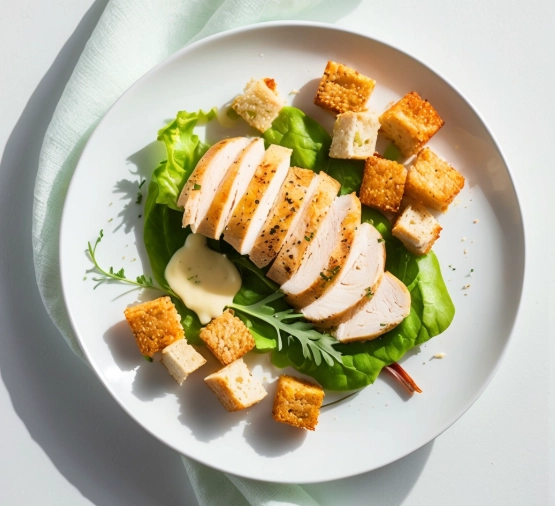
The Major Players (The Calorie Heavyweights)
Caesar Dressing (The #1 Offender): This is the king. Traditional Caesar dressing is an emulsion of oil, egg yolk, Parmesan, anchovies, and lemon. Just 2 tablespoons (a typical serving) can contain 140 to 180 calories, and almost all of it from fat. The problem? Restaurants often use 3 or 4 tablespoons on a large salad. Creamy versions can be even higher. A "light" bottled dressing might bring that down to 60-90 calories for the same amount.
Croutons (The Sneaky Carb Bomb): Those crunchy bits add up fast. A half-cup of seasoned, oil-toasted croutons packs about 100-150 calories, mostly from refined carbs and fat. They're often the least nutritious part of the salad but contribute significantly to the calorie total and that "satisfying" crunch.
Parmesan Cheese (Salty & Calorie-Dense): A quarter-cup of shredded Parmesan adds another 110 calories. It's flavorful, so a little goes a long way, but it's easy to over-shake.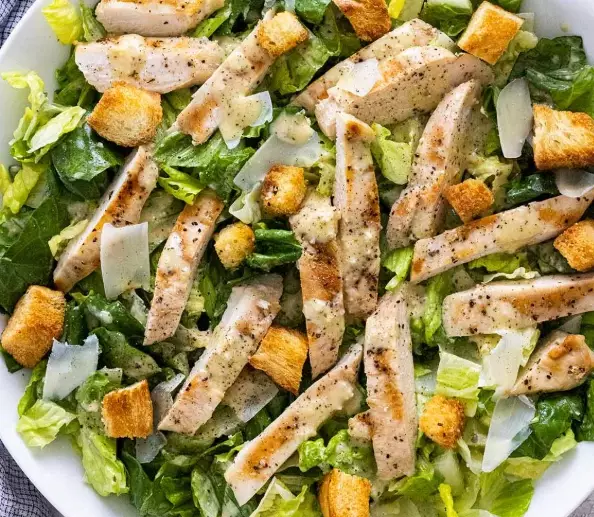
The Supporting Cast
Chicken Breast (The Protein Hero): A 4-ounce portion of grilled, skinless chicken breast is roughly 180-220 calories of high-quality protein. This is the part you want to be substantial. The trouble starts when it's fried ("crispy"), which can add 100+ extra calories, or when the portion is 6-8 ounces of oil-marinated meat.
Romaine Lettuce (The Calorie-Free Base): A huge bowl of chopped romaine (about 3 cups) is only 15-20 calories. It's essentially free, nutritionally speaking, for this discussion. It's all about what you put on it.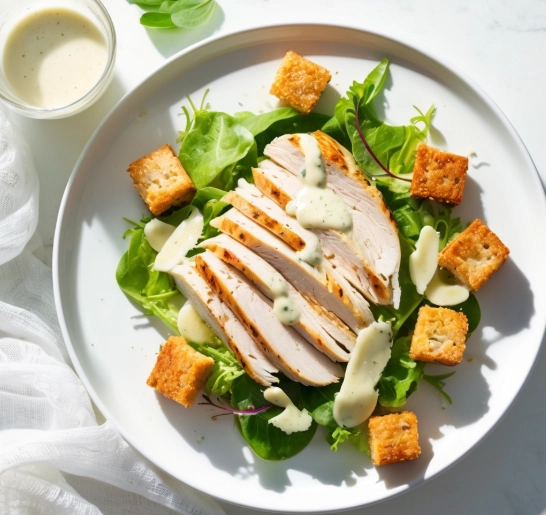
Restaurant Showdown: Who Has the Lightest Salad?
This is where it gets real. You can't trust the menu description. You have to check the nutrition facts. Here’s a comparison of popular chains (calories are for the full entree salad as listed on their official nutrition guides). Note: These often include dressing on the side, but I'm listing the totals with dressing included for a true comparison.
| Restaurant | Salad Name | Approximate Calories | The Catch / Notes |
|---|---|---|---|
| Panera Bread | Caesar Salad with Chicken (Full) | 560 | One of the lighter major chain options. Uses grilled chicken and a lighter hand with toppings. |
| Chick-fil-A | Market Salad (with Grilled Chicken & Caesar Dressing) | 660 | Comes with granola and fruit, so not a classic Caesar, but shows a grilled chicken salad baseline. |
| Applebee's | Grilled Chicken Caesar Salad | 870 | A classic example of a sit-down restaurant portion. Dressing is likely heavy. |
| Cheesecake Factory | Fresh Grilled Chicken Caesar Salad (Lunch) | 1,010 | Famous for huge portions. The "Lunch" size is still massive. Croutons and dressing are plentiful. |
| California Pizza Kitchen | Original Chicken Caesar Salad (Full) | 1,190 | This is the danger zone. Over 1,000 calories, often from a rich, creamy dressing and large amounts of cheese and croutons. |
See the pattern? The jump from Panera to CPK is over 600 calories—essentially an extra meal's worth. The main difference isn't the chicken or lettuce; it's the dressing quantity and richness, and the sheer volume of high-calorie add-ons.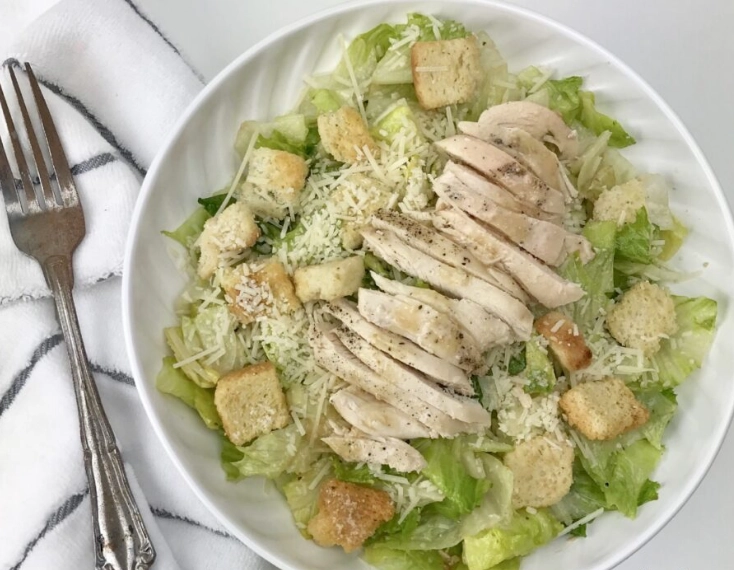
My rule of thumb: at a casual dining restaurant, assume the salad is at least 800 calories unless proven otherwise. Always, always ask for the dressing on the side.
How to Build a Truly Healthier Chicken Caesar at Home
This is your power move. Making it yourself guarantees you know exactly what's in it and lets you hit that 400-550 calorie sweet spot for a filling, satisfying meal. Here’s my go-to blueprint.
The 500-Calorie Homemade Chicken Caesar Blueprint
Base: 3-4 cups chopped romaine hearts (20 cal)
Protein: 5 oz grilled, seasoned chicken breast (cut into strips) (220 cal)
Dressing: 1.5 tbsp light Caesar dressing OR a yogurt-based homemade version (80 cal)
Crunch: 1/4 cup whole-wheat or seeded croutons (OR 5-6 baked chickpeas for a twist) (60 cal)
Cheese: 2 tbsp freshly grated Parmesan cheese (55 cal)
Bonus: Add 5-10 cherry tomatoes or a few slices of cucumber for volume and nutrients (~15 cal)
Total: ~450-500 calories, 40g+ protein.
Pro Swaps for Even Fewer Calories
If you want to go lower, focus on the heavyweights: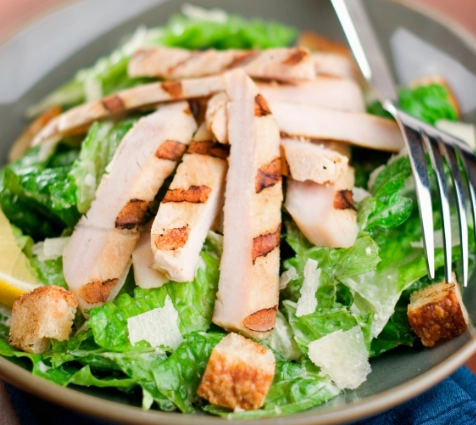
For the Dressing: This is your biggest lever. Try a Greek yogurt base. Mix 1/4 cup non-fat Greek yogurt, a squeeze of lemon, a tiny bit of olive oil, grated Parmesan, garlic powder, and a chopped anchovy fillet (for authenticity). This can slash dressing calories by more than half while adding protein.
For the Croutons: Ditch them. Use roasted chickpeas (crispy, high in fiber and protein) or a small handful of slivered almonds for a healthier fat and crunch.
For the Cheese: Use a microplane to grate the Parmesan. You'll get more flavor coverage with less volume. A little goes a long way.
The goal isn't to make it taste like cardboard. It's to make smart swaps that reduce empty calories while keeping—or even enhancing—flavor and satisfaction. I promise, a yogurt-based dressing can be incredibly creamy and tangy.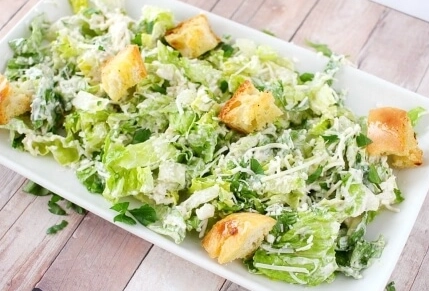
Your Chicken Caesar Calorie Questions, Answered
Is a chicken caesar salad actually good for weight loss?
It can be, but it's a minefield. The version you make at home with controlled portions, light dressing, and lean chicken is an excellent, high-protein meal for weight loss. The one you get at most restaurants is often a calorie trap that can sabotage your goals. The key isagency—you have to be the one controlling the ingredients, especially the dressing.Why do restaurant chicken caesar salads have so many more calories than my homemade one?
Three reasons: portion distortion, profit, and taste engineering. Restaurants use more dressing (it's cheap and makes the salad taste richer, so you're happy), larger amounts of cheese and croutons (bulk, cheap fillers), and often bigger chicken portions. They're designing for maximum flavor impact, not for your calorie budget. A common kitchen practice is to toss the salad in the dressing bowl, which coats every leaf—and wastes a lot of dressing that sticks to the bowl. At home, you drizzle.What's the single best thing I can do to lower calories when ordering out?
Ask for the dressing on the side and use half.Seriously, just this one move can save you 200-400 calories instantly. Dip your fork into the dressing before spearing a bite, instead of pouring it all over. You'll get flavor in every bite but consume a fraction of the amount. Next, ask if they can go light on the croutons and cheese.Are the calories in a grilled chicken caesar vs. a crispy chicken caesar really that different?
I'm tracking macros. Is a chicken caesar salad high in protein?
Reader Comments