Quick Guide
Alright, let's get straight to the point because I know that's why you're here. You found a gorgeous, sprawling hen of the woods mushroom last fall, maybe tucked against the base of an old oak tree. It was a great haul. You sautéed it with garlic, maybe dried some for winter soups. And now, as the air starts to crisp again, you're staring at that same spot, wondering: does hen of the woods come back every year? Will my fungal friend return for an encore performance?
The short, and very good, answer is yes. Absolutely. In fact, its reliable reappearance is one of the things that makes Grifola frondosa (its fancy scientific name) so beloved by foragers. It's not some fleeting, one-season wonder. But—and there's always a but in mycology—it's not as simple as just marking your calendar. The "will it come back" question hinges on a whole hidden world beneath your feet and a few key things you need to understand about the mushroom itself.
I remember my first reliable hen spot. I was almost superstitious about it, checking it weekly from late August onward. When it finally fruited, it felt like a personal victory. But then I got cocky. I told a friend, we harvested it pretty hard, and I worried we'd killed the golden goose, so to speak. It made me dig deeper into how these things actually work.
It's All About the Mycelium: The Real Mushroom
To really get why hens are often perennial, you have to forget about the mushroom for a second. The part we eat—the frilly, layered, polypore shelf—is just the fruit. Like an apple on a tree. The real organism, the mycelium, is a vast, thread-like network living inside the wood of the tree's roots or stump. This mycelial mat is the perennial part. It lives there year-round, slowly decomposing the wood and exchanging nutrients with the tree (in a mutualistic relationship) or just breaking down dead wood (if the tree is gone).
Think of it this way: The mycelium is the underground factory. It works constantly. When conditions are just right—specific temperature drops, adequate moisture, perhaps a trigger from the host tree—the factory sends up its product: the hen of the woods mushroom. So, asking "does hen of the woods come back every year" is really asking if the factory will have a production run this season. If the factory (mycelium) is healthy and the conditions are met, it usually will.
This mycelial network is incredibly resilient. It can survive droughts, cold winters, and even moderate disturbances. That's the core of the perennial promise. Once a hen of the woods mycelium establishes itself in a suitable host (primarily oaks, but also maples, elms, and others), it's there for the long haul, often for the entire lifespan of the tree or until the wood is completely decomposed.
The Factors That Decide Your Annual Harvest
So, the potential is always there. But whether you see a mushroom in any given year depends on a cocktail of environmental factors. It's not a guaranteed annual subscription box, more like a highly probable one if the weather plays nice.
1. Weather is the Big Boss
This is the most variable factor. The mycelium needs a specific shock to trigger fruiting.
- Temperature Drop: A consistent cooling trend is key. Nights dipping into the 40s and 50s °F (5-15°C) after a warmer period is the classic signal. A sudden early frost can sometimes ruin the party, though.
- Rainfall: Adequate moisture is non-negotiable. A good, soaking rain followed by cool temperatures is the perfect recipe. A dry fall can lead to no fruiting, or tiny, stunted mushrooms. The mycelium might be fine, just waiting.
I've had years where my best spot produced nothing because September was a drought. It was frustrating, but checking the next year (a wetter one) proved the mycelium was just biding its time.
2. The Health of the Host Tree
Hen of the woods has a complex relationship with its tree. It's generally considered a weak parasite or a decomposer. It often fruits most robustly when the tree is under some stress—aging, injured, but not yet dead. A tree in severe decline might produce a final, massive "farewell flush" as the fungus senses the end of its food source. A completely healthy tree might not fruit as consistently. A dead stump, however, can continue to produce hens for many years as the fungus decomposes it, but the flushes will gradually diminish as the wood resource is exhausted.
3. How You Harvested Last Time
This is where forager behavior comes in. The good news is that sustainable harvesting encourages perennial returns.
Sustainable Harvesting Rule: Always cut the mushroom cleanly at the base with a knife. Never rip or pull it from the ground/tree. Ripping can damage the delicate mycelial connection at the base of the fruiting body. Think of it like picking an apple vs. tearing off a branch. Also, consider leaving a small portion of the younger, inner fronds behind. This isn't strictly necessary for the fungus's survival, but it can allow that specific fruiting body to continue releasing spores for a bit longer, helping the overall population.
If you harvested responsibly, you almost certainly did no harm to the underlying mycelium. It's a tough customer. The fear of "over-harvesting" killing a patch is largely a myth when it comes to just taking the fruiting bodies. The real threat to the patch is the death of the host tree or physical destruction of the site.
Finding Your Spot: The Annual Hunt
Since we've established that, yes, hen of the woods does typically come back every year to the same location, the next skill is relocating it and knowing when to look.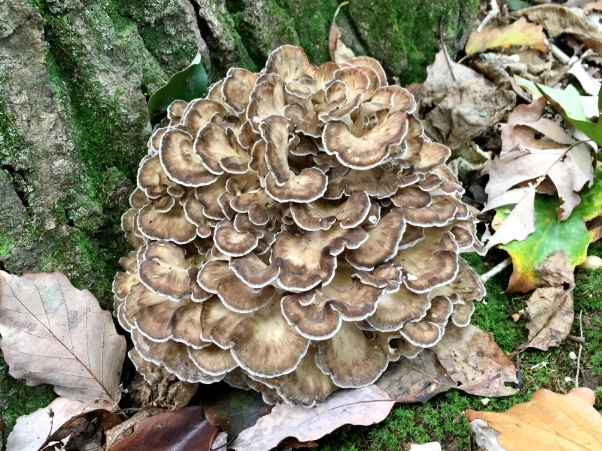
My method? I have a digital map (a simple app on my phone) where I drop pins. But I also use old-school mental markers: "the big triple oak near the creek bend," "the rotten maple stump by the old stone wall." Take a photo of the spot in summer when the mushroom isn't there. It sounds silly, but it helps you remember the exact tree and perspective.
Timing is everything. In most of North America, prime time is late August through October, peaking after the first good cool rains. Start checking your spots in late summer. Look not just at the base, but in a radius of a few feet. Sometimes they emerge a little farther out from the main trunk.
A Critical Warning: Positive identification is paramount. Hen of the woods has a few look-alikes, some of which are not edible. Always consult a reliable field guide or expert, especially when trying a new patch. Key identifiers: it grows in a large, clustered rosette at the base of trees; the individual caps are spoon-shaped with a smooth, greyish-brown top and a white pore surface underneath (no gills); the flesh is white and firm. When in doubt, throw it out. The Mushroom Expert website is an fantastic, detailed resource for identification.
Beyond the Yes: What to Expect From Your Perennial Patch
Okay, so it comes back. But what will it look like? The size and quality can vary wildly year to year.
| Yearly Condition | Likely Result on Your Hen of the Woods | Forager Action |
|---|---|---|
| Ideal Year (Cool, wet fall) | Large, heavy clusters; tender, prime flesh; potentially multiple flushes. | Harvest at prime, preserve excess (drying is excellent). |
| Dry Year | Smaller clusters, tougher flesh, or no fruiting at all. | Check after any late rain. Be patient; the patch isn't dead. |
| Very Wet & Cool Year | Possible very large but sometimes waterlogged fruits. Can be buggy. | Harvest quickly before deterioration. Check for insect trails. |
| After a Heavy Harvest Year | Size might be slightly smaller the next year, but not necessarily. The mycelium's energy reserves can affect size. | Harvest sustainably. The patch is likely fine. |
One thing I've noticed is that patches on north-facing slopes, which stay cooler and moister, tend to be more consistent performers than those on hot, dry south-facing exposures. It's a small microclimate detail that can make a big difference.
Common Questions Foragers Really Ask
This is the big one. If the host tree is alive and the mycelium healthy, it can produce for decades. I know of patches on old estate oaks that have been foraged for 30+ years. If it's on a dead stump, the clock is ticking as the wood decays. You might get 5-10 good years, with the fruits gradually getting smaller.
Usually within a foot or two. The fruiting body emerges from the mycelium, which is concentrated around the tree's root flare. It won't magically appear 20 feet away. But look around the entire base. Sometimes it pops up on a different side of the tree year to year.
Not really, and you shouldn't try. Don't pour water on the spot or fertilize it. You risk disturbing the natural balance. The best thing you can do is protect the site—don't let the area get compacted by machinery, and avoid contaminating it with chemicals (like lawn herbicides if it's in a yard).
If the stump is left, the fungus will often continue fruiting from the decaying stump for years, sometimes even more vigorously initially. If the tree and roots are entirely removed, the patch is almost certainly destroyed.
You see, the question "does hen of the woods come back every year" opens a door into a much deeper understanding of forest ecology. It's not just about getting free food; it's about observing a long-term relationship between a fungus and a tree.
The Ethical Forager's Role in the Perennial Cycle
Knowing that this is a perennial resource comes with responsibility. This isn't a "get it while you can" situation. It's a stewardship. Here’s my personal code for hen spots:
- Secrecy is Overrated, Respect is Not: I'm not fanatical about hiding spots from everyone, but I am selective about who I tell. I share locations with people I trust to harvest sustainably and not trash the area.
- Take What You Need: It's tempting to take a 20-pound monster all for yourself. But will you use it all before it spoils? Sometimes taking half and leaving half for other creatures (or other foragers) feels right.
- Document and Observe: Keep a little note of when your patches fruit, their size, and the weather. Over years, this becomes invaluable data. You'll start predicting your own harvests.
There's a unique peace that comes with having these perennial partnerships with the forest. You're not just taking; you're checking in on an old acquaintance every autumn. Some years it has a grand gift for you. Other years, it's just not in a position to give. And that's okay.
The bottom line, the answer to "does hen of the woods come back every year," is a resounding yes, it is biologically perennial and will likely fruit annually if conditions allow. Its return is one of the great reliabilities in the often-unpredictable world of foraging. Find a good patch, treat it with respect, and it could be your fungal companion for many autumns to come.
Now, if you'll excuse me, it's starting to feel like hen of the woods season. I think I'll go check on my old friends by the creek.
Reader Comments